
Ambient AI & Clinical Documentation
What Is an AI Scribe for Home Health Nurses? A Plain-English Guide
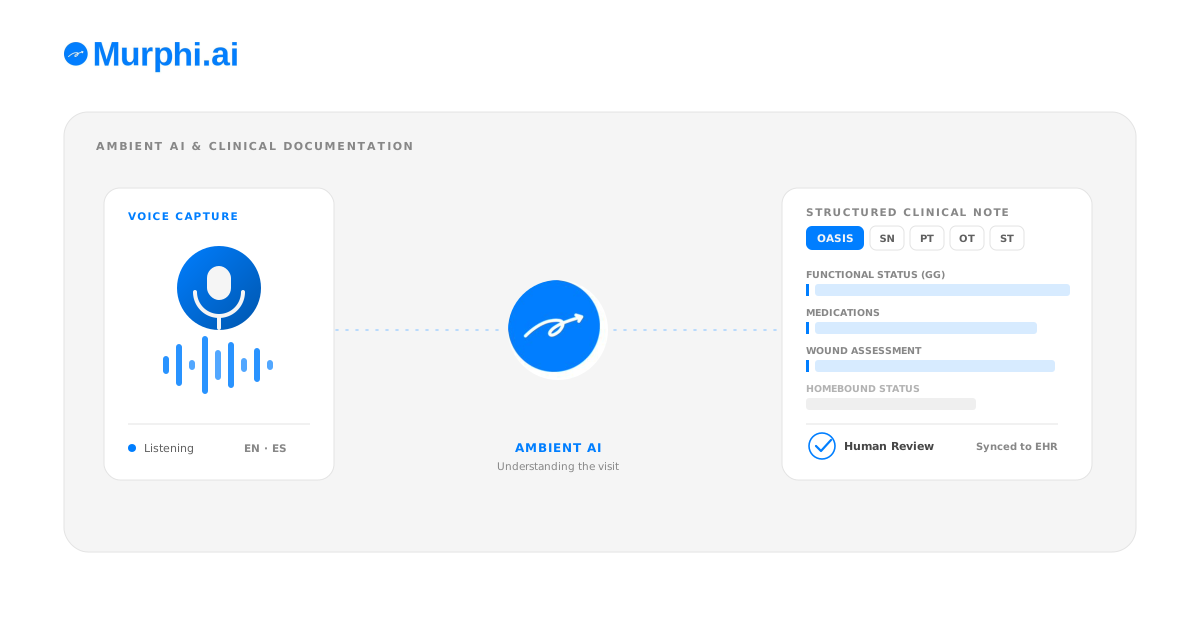
If you're a home health nurse, you already know the real cost of a visit isn't the 45 minutes at the bedside - it's the hour or two of charting that follows it. An AI scribe for home health is software built to take on that second half of the job: it listens during a visit (or takes a short dictation afterward) and turns what was said into structured clinical documentation, so a nurse isn't rebuilding the OASIS or a discipline note from memory at 9 PM.
This guide explains what an AI scribe actually is, how it works in a home health context specifically, what it can and can't do, and the questions nurses and agency leaders should be asking before adopting one.
What Is an AI Scribe, in Plain English?
An AI scribe is software that listens to or transcribes a clinical encounter and converts it into a structured note, so a clinician doesn't have to type or write it manually afterward. Instead of a nurse recalling every detail of a visit hours later to complete an OASIS assessment or a skilled nursing note, the AI scribe captures the relevant clinical information as it's said - during the visit or through a short dictation - and drafts the note for review.
Home health and hospice care has its own documentation structure: there's no exam room, no shared EHR terminal in the room, and the "note" is often several documents at once - an OASIS or HOPE assessment plus separate discipline notes for SN, PT, OT, or ST. An AI scribe built for home health has to account for that structure, not just transcribe a conversation.
How Does an AI Scribe Work for Home Health Nurses?
Most home health AI scribes follow the same basic sequence, adapted to the realities of an in-home visit:
- Before the visit - the tool pulls relevant patient information (history, medications, referral information) from the agency's EHR so the clinician isn't starting from a blank chart.
- During the visit - the nurse turns on listening mode, and the AI scribe captures the clinically relevant parts of the conversation with the patient (and any caregiver present), filtering out small talk and non-clinical chatter.
- After the visit - anything that wasn't said aloud, or needs clarifying, can be added through a short spoken dictation.
- Drafting - the AI scribe combines the visit capture, the dictation, and the referral information into a structured draft note - OASIS, HOPE, or a discipline-specific note.
- Review and sync - the clinician checks the draft before it's finalized, and the completed note syncs back into the agency's EHR.
That last step matters: a properly built AI scribe for home health is designed to work alongside the EHR an agency already uses, not replace it. The clinician still reviews and signs off on what was generated - the tool removes the manual writing and typing, not the clinical judgment.
AI Scribe vs. Traditional Dictation vs. Manual Charting
| Manual Charting | Traditional Dictation | AI Scribe | |
|---|---|---|---|
| Who does the writing | Nurse types the full note | Nurse dictates; a transcriptionist (or the nurse later) types it up | AI drafts the note from the visit or a short dictation |
| When it happens | Usually after the visit, often at home | After the visit | Can start during the visit itself |
| Output | Free text the nurse structures manually | Free text requiring later formatting into the chart | Structured note formatted for OASIS/HOPE/discipline fields |
| Review step | Nurse is the only check | Nurse reviews the transcription | Clinician reviews the AI-generated draft before it's finalized |
What Can an AI Scribe Actually Capture?
For home health and hospice specifically, a well-built AI scribe should be able to handle documentation elements that are unique to the setting, such as:
- Multiple note types from one visit - OASIS or HOPE alongside SN, PT, OT, or ST notes, rather than one generic note format.
- Multi-speaker visits - conversations that include a caregiver or family member in the room, not just a single patient-clinician exchange.
- Functional status detail - the kind of observational detail that feeds items like M1800 and GG scoring, captured from what's actually said and observed rather than filled in after the fact.
- Medications and wound care - updates that are often described verbally or shown physically during a visit.
- Multiple languages - visits conducted in a patient's preferred language.
Not every AI scribe on the market is built with home health's specific documentation structure in mind - some are general medical scribes adapted from outpatient use cases. When evaluating one, it's worth asking directly whether the tool was designed for OASIS/HOPE and multi-discipline notes, or retrofitted from a general clinical scribe.
Is an AI Scribe Accurate? And Who Reviews It?
This is usually the first question a nurse asks, and it's the right one. An AI scribe drafts a note - it doesn't finalize one on its own. In a properly implemented workflow, a clinician reviews the AI-generated draft before it's signed and written back to the chart, the same way a nurse would review a transcription from a human scribe. This is often described as a "human-in-the-loop" model: the AI handles the drafting work, and a person remains responsible for what actually goes into the medical record.
Agencies evaluating an AI scribe should also confirm basic security and compliance posture - whether the vendor is HIPAA compliant and, ideally, SOC 2 audited, since visit audio and patient health information are involved.
Why Home Health Agencies Are Looking at AI Scribes Now
Home health nurses commonly finish their last visit of the day and then spend the evening completing OASIS and discipline notes from home. An AI scribe doesn't change the clinical requirements of OASIS or discipline notes, but it changes when and how the note gets built - during or immediately after the visit, from what was actually said, instead of reconstructed from memory hours later.
Frequently Asked Questions
What is an AI scribe used for in home health?
An AI scribe is used to convert a home health or hospice visit - either a live conversation or a short dictation - into a structured clinical note, such as an OASIS assessment, a HOPE assessment, or a discipline-specific note for SN, PT, OT, or ST. It's meant to reduce the manual typing and after-hours charting that typically follows a visit.
Is an AI scribe the same as dictation software?
No. Traditional dictation software converts speech to text, but a nurse still has to organize that text into the chart's required structure. An AI scribe goes a step further - it listens to a visit or dictation and drafts a structured note formatted for the specific documentation type (OASIS, HOPE, SN, PT, OT, ST), ready for clinician review.
Does an AI scribe replace clinical judgment or chart review?
No. An AI scribe drafts documentation based on what's said and observed during a visit, but a clinician still reviews the draft before it's finalized and synced to the EHR. The tool is designed to reduce manual writing time, not to remove clinical review from the process.
Can an AI scribe handle multiple note types from one home health visit?
A home health-specific AI scribe should be able to generate more than one note type from a single visit - for example, an OASIS assessment alongside a skilled nursing note - since home health visits often require several documents at once. This is different from general medical scribes, which are typically built around a single office-visit note.
Does an AI scribe work with the EHR an agency already uses?
A well-built AI scribe for home health is designed to connect to the agency's existing EHR - pulling in patient information before a visit and syncing the completed note back into the same chart - rather than requiring the agency to move to a new system.
Explore Ambient AI & Dictation
Murphi's Ambient AI & Dictation module listens during a visit or takes a short clinician dictation, then drafts OASIS, HOPE, SN, PT, OT, and ST notes - pulling from the patient's existing EHR record. Notes are ready for review the same day, with clinician review before anything is written back to the chart. Once approved, completed notes sync back to the EHR within minutes.